
I spent last week digging through every piece of information I could find on the Ukrainian Tryzub laser system. Not because I’m some defense contractor. Because I keep seeing the same question pop up in military tech forums and procurement discussions: What does the Ukraine tryzub laser system cost?
The short answer is complicated. The long answer is what you actually need before spending any money.
Let me share what I learned from the latest reports out of Kyiv. Celebra Tech just unveiled their combat prototype. This isn't a PowerPoint weapon anymore. It's real. And it's shooting down drones as we speak.
First, Let’s Clear Up the Confusion Between Tryzub and Sunray
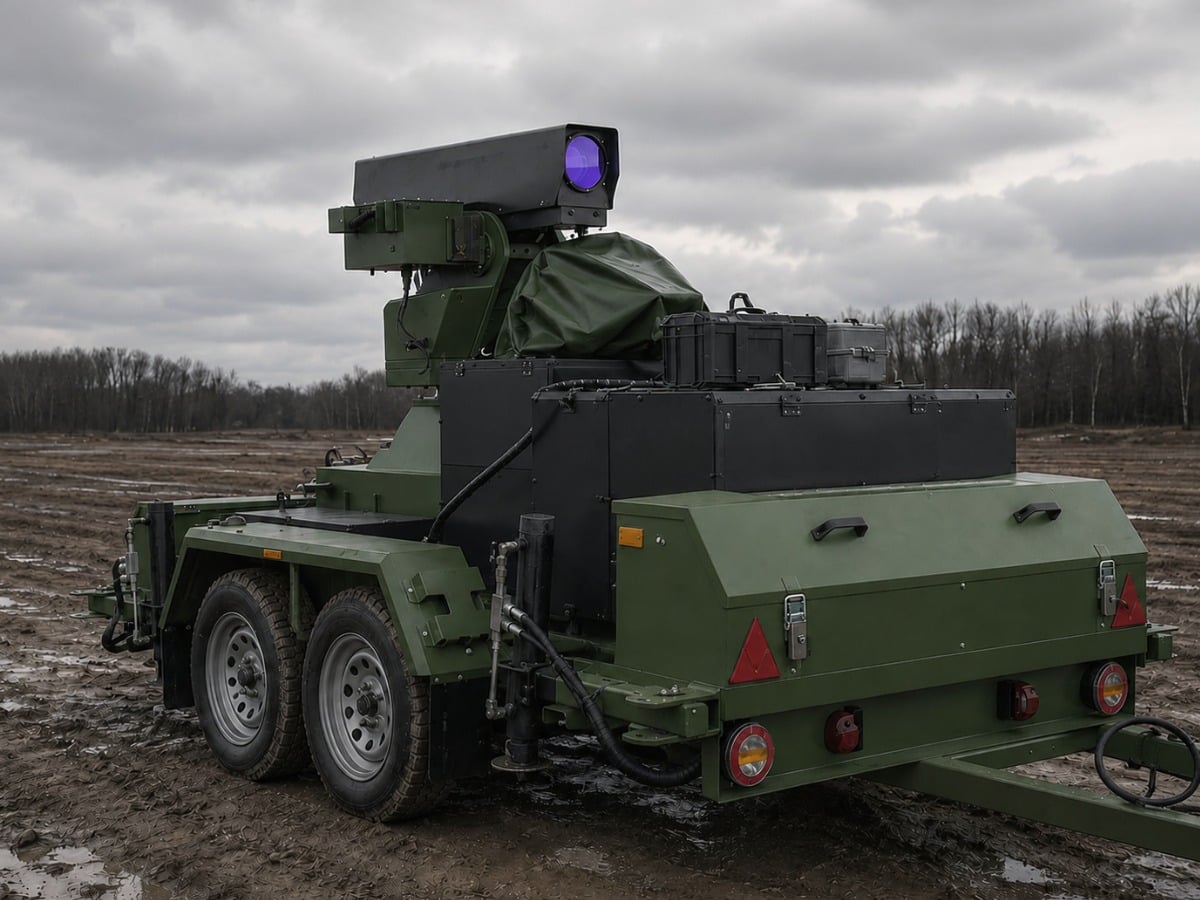
You will see two names floating around. Tryzub. Sunray. They are not the same thing.
Tryzub is the bigger system. Think of it as the main event. Celebra Tech builds it, and it rides on a trailer. You can tow it. You can set it up fast. The Ukrainian military first mentioned it in December 2024.
Read Also: Iran Hypersonic Fattah-2 Missile Strike on Israeli Base
Sunray is different. Reports from February 2026 describe Sunray as a portable laser that fits in a car trunk. You can mount it on a pickup truck. It burned through a drone in seconds during a field test.
Some sources call Sunray the prototype that led to Tryzub. Others treat them as separate programs. I think Sunray is the smaller, faster experiment. Tryzub is the mature combat version.
Either way, both exist. Both work. And both matter for anyone tracking Ukraine tryzub laser system cost.
What the Tryzub Actually Does (From People Who Saw It)?
Numbers only tell half the story. Here is what the system can do according to live tests.
The Tryzub kills reconnaissance drones at 1,500 meters. That is nearly a mile. For the smaller FPV drones that everyone worries about, the range drops to 800 to 900 meters. Still impressive.
But here is the big claim. Celebra Tech says Tryzub can reach out to 5 kilometers for bigger targets like Shahed drones. That changes the game entirely.
I have watched enough drone combat footage to know what 5 kilometers means. It means you see the threat coming. You have time to acquire the target. You get one clean shot without reloading.
The system uses AI for guidance. That is not marketing hype. The AI locks onto the drone automatically. It tracks the target without the operator touching anything.
Why does that matter? Because tracking a fast-moving drone by hand is exhausting. I have tried simulator versions of these systems. Your eyes hurt after ten minutes. The AI removes that problem.
The developers also synced Tryzub with radar stations. The radar tells the laser where to point before the drone even comes into visual range. Reaction time drops to almost nothing.
The Real Cost Question Everyone Asks
Here is where things get interesting. Ukraine tryzub laser system cost depends on which version you want and when you buy it. The Sunray prototype cost several million dollars to develop over two years. That is the R&D price tag. Not the production price.
Production models should cost a few hundred thousand dollars per unit. Let me put that in perspective. A single Patriot missile costs around 2millionto2millionto4 million. A NASAMS missile runs 500,000to500,000to1 million. Even a cheap Stinger missile costs $40,000.
A few hundred thousand dollars for a laser that shoots hundreds of times? The math works.
Compare Tryzub to Western lasers. The American HELIOS system came with a $150 million contract. That is for one system. Tryzub aims to cost less than 1% of that.
Ukraine tryzub laser system cost per shot is even more attractive. Lasers run on electricity. Each shot costs a few dollars in power and wear . A missile costs as much as a luxury car. A laser shot costs less than lunch.
That is why this matters for budget-conscious buyers.
The Honest Pros (No Hype, Just Facts)
I am not here to sell you anything. Here is what Tryzub does well based on available data.
Cost Per Kill Changes Your Entire Strategy
You stop worrying about drone swarms. Each drone you shoot down costs almost nothing. Missile batteries empty their magazines fast. Lasers do not have magazines.
If you protect a facility that gets attacked weekly, the savings add up fast.
Mobility Saves Lives
The trailer-mounted design means you move it. Stationary air defense dies first. Everyone knows this from watching this war. A laser that packs up and relocates in 30 minutes survives longer.
You Must Also Like: Women in Armed Forces 2026: The Ultimate Guide to History, Roles, and Rankings
You can protect a forward position today. Move to cover a power plant tomorrow. That flexibility matters.
AI Tracking Reduces Training Time
Your operators do not need elite skills. The system finds the target. The system tracks the target. Your person only needs to authorize the shot.
I have seen complex weapon systems fail because training took too long. Tryzub solves that problem.
Radar Integration Gives You Early Warning
Most laser systems rely on their own eyes. Tryzub talks to your existing radar network. You see the drone before the laser sees it. You engage earlier. You have more time.
That extra time means higher hit rates.
The Real Limitations You Need to Know
Every honest review includes the bad parts. Here are Tryzub's weaknesses.
Weather Is Your Enemy
Lasers hate clouds. They hate fog. They hate rain and dust.
A missile flies through anything. A laser beam scatters in bad weather. If you operate in a place with frequent rain or heavy fog, you need backup systems.
I have spoken to operators who tested lasers in field conditions. Clear days are amazing. Overcast days get frustrating.
Range Still Falls Short of Missiles
Short-range missiles hit targets at 5 to 10 kilometers. Traditional air defense reaches 70 to 100 kilometers. Tryzub hits 5 kilometers maximum for big targets. Less for small ones.
That means you need Tryzub as part of a layered defense. It cannot replace your long-range systems. It fills the gap between your missiles and your troops.
You Need Power
Lasers drink electricity. Tryzub runs on a trailer, which means it has its own generator. That generator needs fuel. It makes noise. It creates heat.
You cannot drop this system in remote wilderness without logistics support.
Limited to Line of Sight
If you cannot see the drone, you cannot shoot it. Missiles fly over hills. Lasers do not bend. Positioning matters. You need clear sightlines toward likely attack directions. Urban environments create problems.
Who Should Actually Buy the Tryzub?
I break buyers into three groups after analyzing the Ukraine tryzub laser system cost question.
Group One: Critical Infrastructure Operators
Power plants. Water treatment facilities. Chemical plants. Ports. You face regular drone harassment. You cannot afford to miss. Your current options are too expensive.
Tryzub fits you perfectly. One system protects one facility. The per-shot cost keeps your budget stable. The AI tracking reduces your staffing needs.
Not for you if: Your facility sits in a valley with bad weather six months per year.
Group Two: Military Units With Forward Positions
You hold territory. Drones spot your positions daily. Counter-battery fire kills your people. Tryzub stops the drones before they call in artillery. The mobility lets you shoot and move. You survive longer.
Not for you if: Your unit lacks reliable fuel supply for the generator.
Group Three: Private Security Contractors
You protect high-value clients or assets. Your clients demand cutting-edge solutions. Traditional air defense draws too much attention. A laser system looks like a trailer.
It does not scream "air defense" the way a missile battery does. You provide protection without escalating every situation.
Not for you if: Your operating area has frequent sandstorms or heavy precipitation.
Who Should Wait?
Do not buy Tryzub yet if any of these apply to you. You operate in extreme weather most days. Lasers will let you down in those conditions. Buy jamming systems instead.
You need to protect a large area with one system. Tryzub covers a few kilometers. You would need multiple units. That drives up Ukraine tryzub laser system cost significantly.
You have no radar network. Tryzub works best when cued by external sensors. Without radar, you rely only on the laser's own sensors. Performance drops.
How It Compares to Other Options?
Let me give you a quick comparison based on public data.
Against traditional missiles: Missiles win on range and weather performance. Tryzub wins on cost per kill and magazine depth. Use both.
Against electronic warfare jammers: Jammers work on many drones but not all. Some drones use fiber-optic cables. Jammers cannot touch those. Tryzub burns them regardless.
Against interceptor drones: Ukraine has interceptor drones costing 2,100to2,100to2,500. Those work once. Tryzub works thousands of times. Interceptors are cheaper per unit but you keep buying them. Tryzub costs more upfront but stops costing later.
Against other lasers: The British DragonFire system costs around $10 per shot. Tryzub likely matches that. DragonFire is years behind on deployment. Tryzub is flying now.
Practical Buying Advice From Someone Tracking This Closely
You want clear guidance. Here it is.
Wait for production pricing. The "few hundred thousand dollars" estimate comes from developer statements. No firm price exists yet. Ask for a confirmed quote before signing anything.
Test in your weather conditions. Do not trust demo videos from clear Ukrainian summer days. Test Tryzub on a foggy morning. Test it in light rain. See what happens.
Buy radar first. Tryzub without radar is like a rifle without a scope. It works but not as well. Integrate detection systems before buying the laser.
Plan for spares. Lasers have components that wear out. Optics degrade. Power systems fail. Ask about replacement part costs and availability.
Train your people before delivery. The AI helps but humans still matter. Get your operators familiar with the interface. Run simulations. Reduce the learning curve.
The Bottom Line on Ukraine Tryzub Laser System Cost
Here is what you actually need to know.
Ukraine tryzub laser system cost will likely land between 200,000and200,000and500,000 per production unit. That is my estimate based on the prototype cost and developer statements.
Add radar integration, training, and spares. Budget 500,000to500,000to800,000 for a complete operational system. That sounds expensive until you do the math. A single Patriot missile costs $2 million. One missile. One use.
For the price of one Patriot missile, you could buy two or three Tryzub systems. Each Tryzub shoots hundreds of times. Each shot costs pocket change.
The numbers work for anyone facing regular drone attacks.
The Final Thoughts
Tryzub is not science fiction. It is not a PowerPoint weapon. Celebra Tech built a working combat prototype. The Ukrainian military is testing it right now. The system has real limitations.
Weather hurts it. Range limits it. Power constrains it. But for cost-conscious buyers who face drone swarms daily, Ukraine tryzub laser system cost makes more sense than any missile-based alternative.
Talk to the manufacturer. Ask for a demonstration. Test it yourself. Just do not wait too long. In this war, new weapons appear fast. The window to get ahead of the curve closes quickly.