
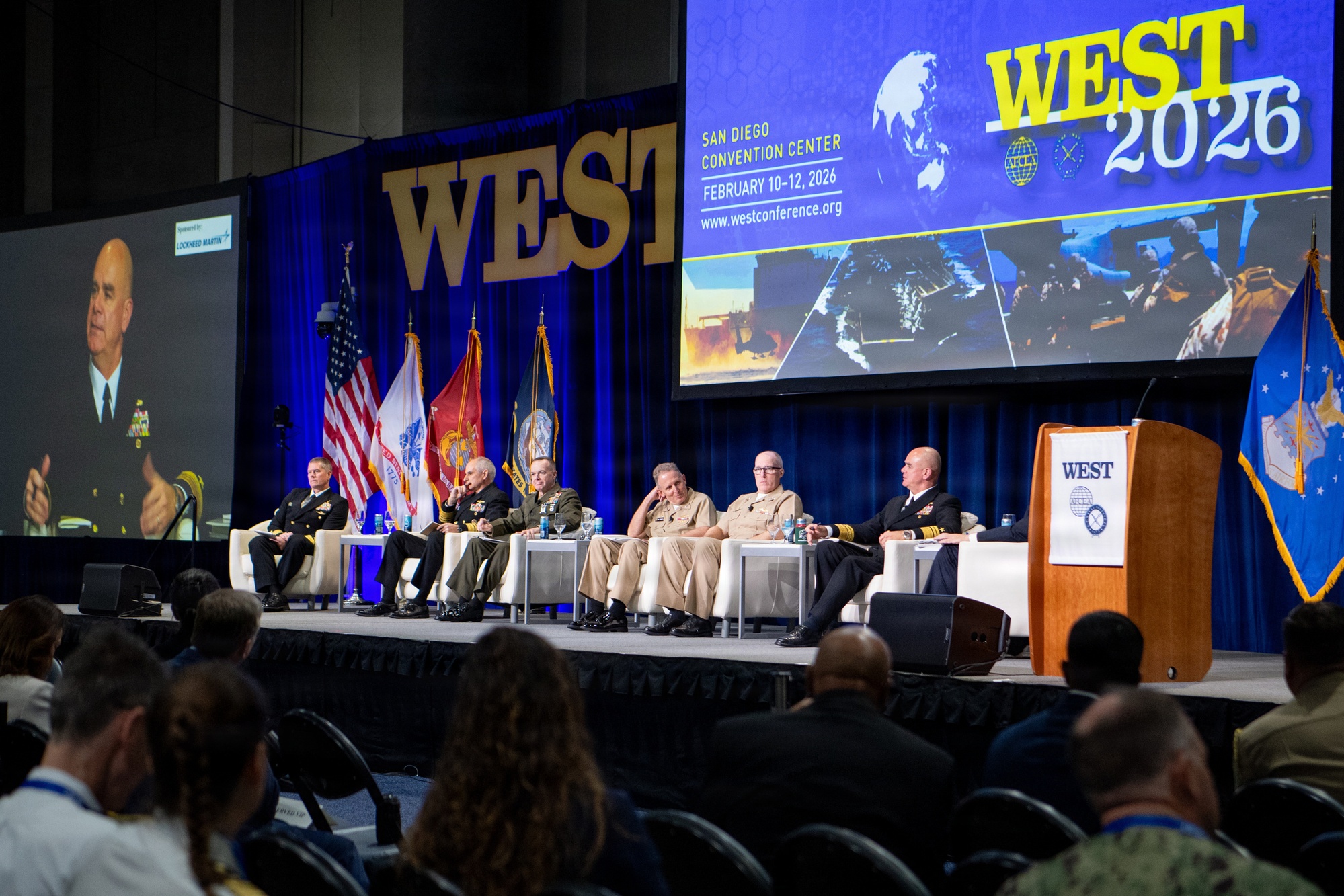
The Current Navy chain of Command got to be a central subject when the Secretary of the Navy spoke at the WEST 2026 Conference. His comments centered on administration, responsibility, and availability in a fast-changing world.
Many participants were not fair tuning in for arrangement upgrades. They needed clarity. Who is actually in charge? Who makes operational choices? And who is the Chief of the Navy?
If you are looking for coordinate, dependable answers, this direct breaks it down in straightforward terms. No buildup. Fair structure, parts, and commonsense insight.
What Is the Current Navy Chain of Command?
The current Navy chain of command starts with civilian leaders. It goes down through dressed officers to operational commanders. Here is the simplified structure:
-
President of the United States
-
Secretary of Defense
-
Secretary of the Navy (SECNAV)
-
Chief of Naval Operations (CNO)
-
Fleet Commanders and Operational Leaders
Each role has limits. Each role has clear authority.
Understanding this structure helps avoid confusion. This is especially true when discussions mention "Navy leadership" in everyday language.
Read Also: US Navy 5th Fleet Attack Drone Launch From Ships at Sea
Who Is the Chief of the Navy?
The reply depends on what you cruel by “Chief.”
The operational head of the Navy is the
Chief of Maritime Operations. The CNO is the highest-ranking uniformed officer in the Navy. He or she prompts the President and Secretary of Defense. The CNO centers on preparation, preparing, and preparing the fleet.
The civilian head of the Naval force is the
Secretary of the Navy. The Secretary manages budget, arrangement, and organization. The SECNAV does not command ships in combat. That duty streams through combatant commanders.
This refinement things. Many individuals befuddle approach authority with operational command.
Why the WEST 2026 Conference Speech Matters?
The WEST Conference unites Navy pioneers, defense contractors, policy experts, and researchers. When the Secretary of the Navy talks there, the group of onlookers tunes in closely. At WEST 2026, the Secretary emphasized three needs:
-
Fleet modernization
-
Cyber readiness
-
Officer development
He moreover fortified regard for the current Navy chain of command. Clear authority avoids botches amid crises. In my experience with defense boards, I've learned this: clear command structures reduce confusion during real-world operations.
In military frameworks, equivocalness costs time. Time costs lives.
How the Navy Chain of Command Really Works in Practice?
On paper, the structure looks clean. In home, it includes coordination. For example:
-
The SECNAV sets policy direction.
-
The CNO trains and equips the forces.
-
Combatant commanders execute missions globally.
The system separates civilian control from military execution. That balance protects democratic oversight while maintaining operational effectiveness. Pros of this structure:
-
Strong accountability
-
Clear civilian oversight
-
Distributed responsibility
Cons:
-
Slow decision-making during peacetime.
-
Bureaucratic layers
-
Budget constraints tied to political cycles.
No system is perfect. But this structure has worked for decades.
SECNAV Delivers Remarks at Harvard Kennedy School
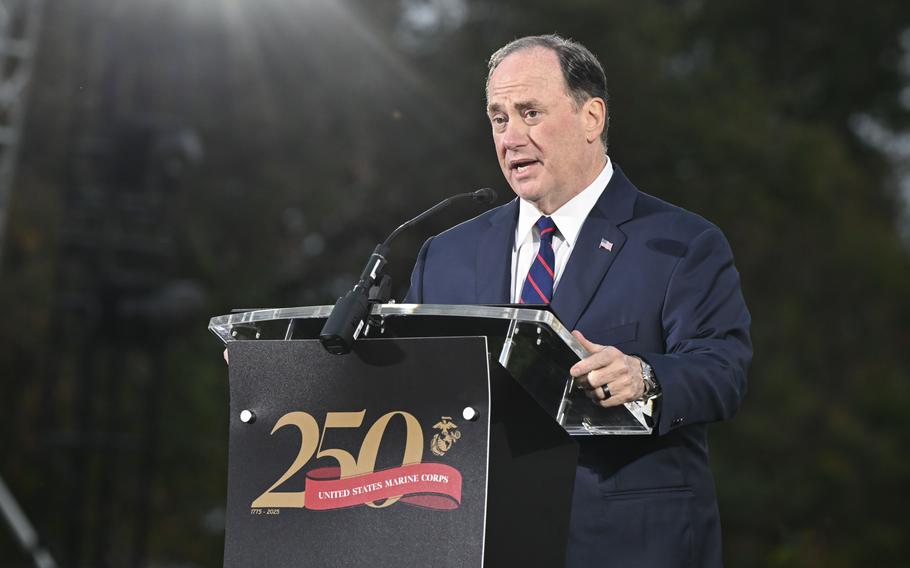
Earlier this year, SECNAV spoke at the Harvard Kennedy School. His remarks became a hot topic of discussion. In that speech, he focused on:
You Must Also Like: Types of Naval Ships in Defense: A Complete Guide to Modern
-
Leadership ethics
-
Civil-military balance
-
Talent retention
That message echoed at WEST 2026.
The takeaway was simple: hardware matters, but people matter more. From a leadership perspective, investing in officer education often leads to better long-term results. Spending heavily on technology without proper training may not be as effective.
Who Is the Speaker at the Naval Academy Graduation?
Another common search query is: Who is the speaker at the Naval Academy graduation? Graduation speakers vary each year. Often, it is:
-
The President
-
The Secretary of the Navy
-
A senior military leader
-
Occasionally, a distinguished civilian
The United States Naval Institute picks speakers based on relevance, past success, and impact. When the Secretary talks at graduation, the message, as a rule, strengthens the Current Navy chain of command and the significance of duty.
From past ceremonies, the best speeches focus on benefits, teaching, and resilience. They say less about laws and more about what truly matters.
Naval War College Reading List: Why It Matters?
The Naval War College distributes proficient reading records to shape vital thinking. The maritime war college reading list frequently incorporates:
-
Military history
-
Leadership theory
-
Geopolitical strategy
-
Cyber warfare studies
Why this matters:
Solid command starts with a solid education.
When pioneers get it right, they maintain a strategic distance from rehashing botches. When officers peruse broadly, they make way better choices beneath pressure.
I found that technique books improve choice clarity more than strategic manuals do, based on individual audits of defense reading records.
Honest Look: Strengths and Weaknesses of the Current Navy Leadership Model
No leadership model is flawless. Here is a balanced breakdown.
Strengths
-
Clear civilian control
-
Defined operational hierarchy
-
Structured accountability
-
Institutional education pipeline
Weaknesses
-
Budget uncertainty
-
Political turnover affects long-term planning
-
Complex procurement process
-
Slow modernization in some areas
If you are evaluating the Current Navy chain of Command, understand both sides. Leadership stability is a strength. Bureaucratic delay is a weakness.
Practical Guidance: How to Check Navy Leadership News?
When you read headlines like “Secretary of the Navy speaks at WEST 2026,” ask:
-
Is this policy guidance or an operational order?
-
Does it impact fleet readiness?
-
Does it affect the budget or training?
Avoid reacting to headlines alone.
Look for:
-
Official transcripts
-
Clear policy changes.
-
Budget reallocations
Do not rely on social media summaries. They often oversimplify.
Modern Challenges Facing the Chief of Naval Operations
The Chief of Naval Operations faces complex issues today:
-
Cyber threats
-
Indo-Pacific security
-
Recruitment challenges
-
Aging fleet maintenance
Each decision must align with the Current Navy chain of Command and civilian oversight. This balance can slow action. But it also prevents unilateral military escalation.
Why Chain of Command Clarity Protects Service Members?
Clear command structure protects sailors. When authority lines are clear:
-
Orders are traceable
-
Responsibility is defined
-
Misconduct investigations are structured
In any high-risk organization, unclear leadership creates danger. The Navy avoids that through rigid hierarchy.
What Civilians Often Misunderstand
Many civilians assume the Secretary commands ships. He does not. Operational command flows through unified combatant commanders under the Secretary of Defense.
Understanding this prevents confusion when reading statements from the Secretary of the Navy.
Leadership Development: The Real Focus of WEST 2026
At WEST 2026, technology discussions drew attention. But leadership dominated conversations. The Secretary emphasized:
-
Retention of skilled officers
-
Investment in training
-
Ethical command
Hardware wins battles. Leadership prevents wars. That message reflects the deeper strength of the Current Navy chain of Command.
Frequently Asked Questions
Who is the Chief of the Navy?
The Chief of Naval Operations is the highest-ranking uniformed officer in the Navy. The Secretary of the Navy is the top civilian leader.
What does the Secretary of the Navy do?
The Secretary oversees policy, budget, and administration. He does not command combat missions directly.
What is the Naval War College reading list?
It is a professional development list designed to improve strategic thinking among officers.
Who speaks at Naval Academy graduation?
Speakers vary. Often it is the Secretary of the Navy, the President, or a senior military leader.
Why This Structure Still Works?
Despite criticism, the Current Navy chain of Command provides stability. It ensures:
-
Civilian oversight
-
Professional military advice
-
Clear authority
-
Defined responsibility
Many nations need this balance. The U.S. model, whereas blemished, anticipates concentration of unchecked military power.
Final Thoughts
The Secretary of the Navy’s discourse at WEST 2026 was not fair ceremonial. It strengthened the significance of structure, instruction, and restrained leadership.
If you need to get it the Navy, do not center as it were on ships or weapons. Focus on:
-
Who leads
-
How authority flows
-
How decisions are made
The Current Navy chain of Command is not a chart. It is the backbone of accountability. And when leadership works well, it is almost invisible. That is often the sign that the system is doing its job.