
I stayed up until 4 AM to watch this launch. Not because I had to. Because I wanted to see if SpaceX could pull off another one of these crowded rideshare missions without anything going wrong.
The SpaceX Transporter 16 mission lifted off from Vandenberg Space Force Base in California on March 30, 2026, at 4:02 AM Pacific Time. I watched the live stream on my phone. The sky was dark. The Falcon 9 lit up the whole coast for a few seconds. Then it was gone.
What makes this mission different is not the rocket. It is what was inside.
119 Payloads. One Rocket. How That Even Works
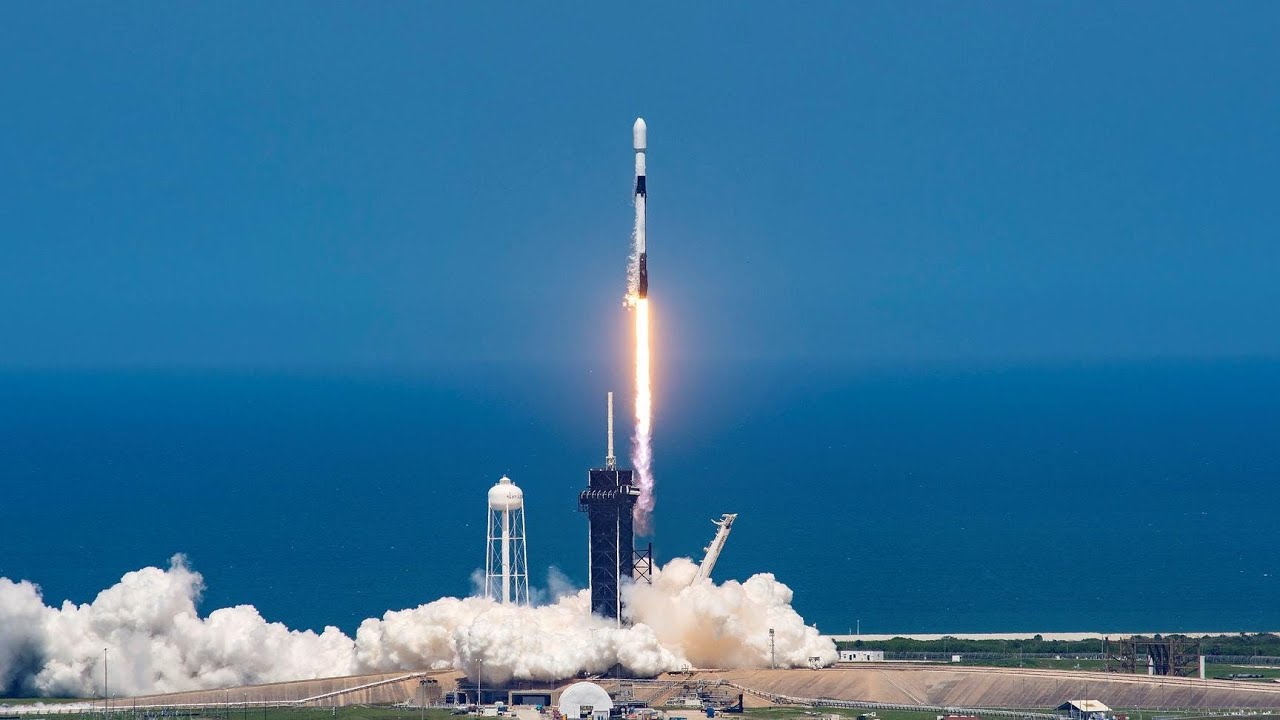
Think of Transporter-16 like a city bus instead of a private car. Normally, if you want to put a satellite in space, you buy the whole rocket. That costs tens of millions of dollars. Only governments and big companies can afford that.
Read Also: How Long Will Artemis 2 Be in Space?
SpaceX created the rideshare program to fix this problem. Small companies, universities, even high school teams can buy a seat on the bus. They pay based on how much space they take up and how heavy their satellite is.
For Transporter-16, 119 payloads from over 20 countries shared the same Falcon 9 rocket. Some were the size of a shoebox. Others were as big as a washing machine.
They all launched together. They all separated at different times. And they are all now in Sun-Synchronous Orbit, about 500 km above Earth. I have seen a few of these rideshare launches before. But 119 is a lot.
That is more than one payload every two minutes of the deployment sequence. The second stage had to fire its engine, coast, fire again, release some satellites, wait, release more. The whole thing took about two and a half hours.
One wrong move and satellites could bump into each other. SpaceX has done this 16 times now. They have the procedure down.
The Booster That Would Not Quit
The Falcon 9 booster for this mission had code B1093. This was its 12th flight.
Think about that. The same hardware that launched satellites for the US Space Development Agency. The same booster that carried nine batches of Starlink internet satellites. It just kept flying. They refuel it, check for damage, and send it up again.
About eight and a half minutes after launch, B1093 came back down. It landed on a droneship in the Pacific Ocean called "Of Course I Still Love You. That was the 187th landing on that specific ship and the 592nd booster landing for SpaceX overall.
I have watched booster landings dozens of times. It still looks fake. A 15-story tall tube falling from space, firing its engines at the last second, and gently touching down on a moving platform in the middle of the ocean. That should not be possible. But they do it so often now that nobody even talks about it.
This was also SpaceX's 21st launch from Vandenberg in 2026 alone . The year is only three months old.
The Quiet Mission That Affects Your Phone GPS
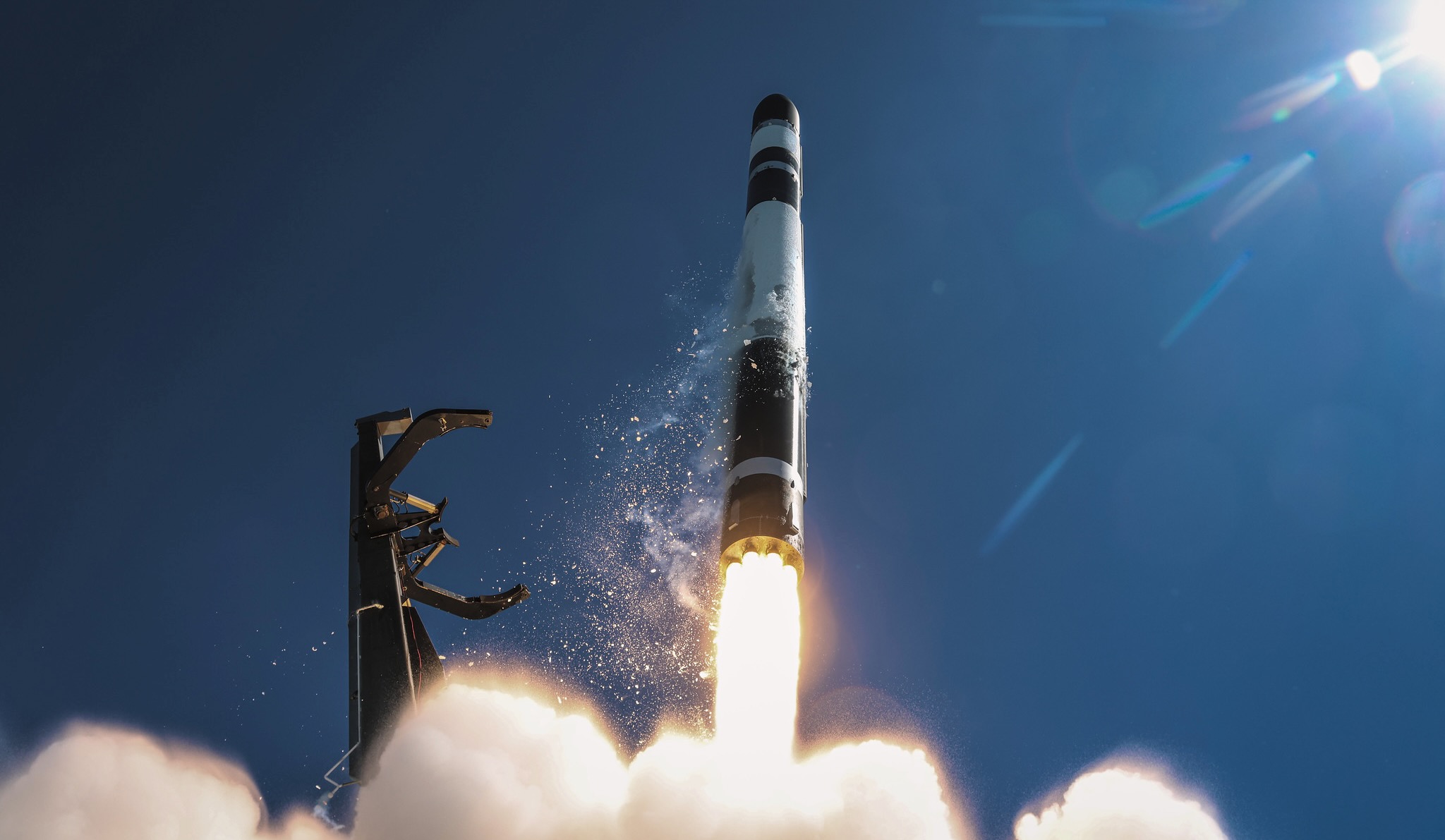
Most people will never hear about the MagQuest project. But you use it every day.
The National Geospatial-Intelligence Agency (NGA) put three small CubeSats on this launch. Their job is to measure Earth's magnetic field. That data feeds into the World Magnetic Model (WMM).
Why does that matter? Your phone's GPS uses the magnetic model to figure out which direction you are facing. Ships use it for navigation. Airlines use it. Military uses it.
The magnetic field shifts over time. The North Pole moves about 30 miles every year. If the model is wrong, your compass points the wrong way. So the NGA constantly sends up new sensors to keep the model accurate.
Spire Global also launched ten satellites on this mission, including one with a diamond quantum magnetometer for the same MagQuest program. A diamond. In space. Measuring magnetic fields. That is not something I expected to write today.
Unhackable Internet Coming From Space
One of the more interesting payloads on Transporter-16 was the SPOQC satellite from the United Kingdom. SPOQC stands for Space-based PhOtonics for Quantum Communication. It is a 12U CubeSat. About the size of two shoeboxes stacked together.
The goal is to test quantum encryption from space. Regular encryption can eventually be broken by powerful computers. Quantum encryption cannot. If you try to intercept the signal, you change it. The sender and receiver know someone is listening.
You Must Also Like: Safety Standards in Commercial Spaceflight Missions
This is the first step toward a global quantum internet. The kind of network that could protect banking, military communications, and personal data from future cyber attacks.
Right now it is just a test. A small satellite seeing if the technology works in the harsh environment of space. But if it works, it is a big deal.
The Massive Satellite That Unfolds Like An Origami
Most satellites on rideshare missions are small. CubeSats. Microsats. Things you could hold in your hands. Then there is Gravitas from K2 Space.
This satellite has a wingspan of 40 meters when its solar panels are fully deployed. That is longer than a Boeing 737. It weighs about two metric tons. It generates 20 kilowatts of electricity. For comparison, a typical CubeSat generates maybe 50 watts. Gravitas produces 400 times that.
Why does that matter? Because the next big thing in space is in-orbit data centers. Companies want to process data in space instead of beaming it down to Earth. That takes a lot of power. Gravitas is testing the technology that will make those data centers possible.
The satellite launched folded up. It unfolds itself once it is in orbit. One wrong move and a 40-meter structure fails to open. That is a lot of money floating uselessly in space. K2 Space seems confident. We will know in a few weeks if it worked.
What Else Flew On Transporter-16?
The payload list is long. Here are the ones that stood out to me.
Italian IRIDE Program sent eight Eaglet II Earth observation satellites. These are 25 kg each. They carry RGB optical sensors for monitoring land and tracking ships. Italy now has 24 of these in orbit.
Varda Space launched its sixth reentry capsule. The company manufactures things in microgravity. Then the capsule comes back to Earth. Drugs. Fiber optics. Materials that cannot be made in gravity. This is their sixth attempt. They are getting good at it.
Momentus Vigoride 7 is an orbital transfer vehicle. It carries its own propulsion. After launch, it will move some of the smaller satellites to different orbits. Think of it as a delivery van that leaves the bus and goes to specific addresses.
NASA had multiple experiments on board. One tests new thermal protection tiles for reentry. Another studies high-energy particles from the Van Allen belts. Space weather forecasting. Communications networks on Earth get disrupted by solar storms. Better predictions mean fewer surprises.
TechEdSat23 is testing an "exo-brake. A device that helps small satellites deorbit faster. Space junk is a growing problem. Anything that brings old satellites down sooner is good for everyone.
Spire Global launched four IoT connectivity satellites for a company called Myriota. These help smart devices in remote areas send data. Farms. Oil rigs. Ships. Places without cell towers.
The Cost Question. Is Rideshare Worth It?
I have talked to people who used SpaceX rideshare for their satellites. The consensus is mixed.
The good part. Cost per kilogram is about $5,000 to $8,000. A dedicated small rocket might charge $50,000 per kilogram. Rideshare is dramatically cheaper. A university with a $200,000 grant can actually afford to build and launch a CubeSat now. That was not true ten years ago.
The bad part. You do not choose your orbit. You go where the bus goes. Sun-Synchronous Orbit is useful for Earth observation satellites. But if your satellite needs a different orbit, you are out of luck. Or you pay extra for an orbital transfer vehicle like Vigoride.
The schedule risk. Rideshare missions get delayed sometimes. If your satellite is ready but the primary payload is not, you wait. I know one team that waited eight months for their launch slot.
Their satellite sat in a clean room. The batteries aged. The software became outdated. They still launched. But the delay cost them. For most small operators, the savings are worth the trade-offs. For critical government payloads, they usually buy dedicated rockets.
What I Learned Watching This Launch?
I have followed SpaceX for years. The Transporter missions still impress me. Not because of the rocket technology. That is mature now. They launch every few days. It is routine.
What impresses me is the business model. SpaceX figured out how to make space accessible to people who are not governments or billionaires.
A research lab in Bulgaria can fly an experiment. A startup in Vietnam can test its prototype. A high school in California can put a student-built CubeSat into orbit.
That was not possible a decade ago.
The SpaceX Transporter 16 mission is not the most exciting launch of the year. No humans on board. No Mars destination. No dramatic failures or successes.
But it represents something bigger. Space is becoming normal. Not special. Just another place where we do business, conduct research, and solve problems.
And that is worth staying up until 4 AM to watch.
Launch Date: March 30, 2026
Launch Site: Vandenberg Space Force Base, California
Rocket: Falcon 9 (Booster B1093, 12th flight)
Payloads: 119
Orbit: Sun-Synchronous Orbit (SSO)
Booster Landing: Droneship "Of Course I Still Love You" (Pacific Ocean)
Notable Payloads: MagQuest (NGA), SPOQC (UK quantum comms), Gravitas (K2 Space), Eaglet II (Italy IRIDE), Vigoride 7 (Momentus)