
The SEPECAT Jaguar is one of those moments in aviation history, a momentous aircraft in the annals of military flying. The Jaguar is modular and used by different forces around the world. Most famously, it is used by the RAF and SEPECAT Jaguars in the UK.
One of the other parts that make this plane special is its motor, which gives it the control needed to fly and the thrust to perform missions. The Rolls-Royce Turbomeca Adour is the engine of the SEPECAT Jaguar. One of the main contributory factors in this the aircraft's success.
In this blog, we’ll explore the unique types of engines used in the SEPECAT Jaguar. We’ll focus on the Rolls-Royce Turbomeca Adour engine. We'll also look at the RAF Sepecat Jaguar, its cockpit, and why this plane is still vital in military aviation.
What Is the SEPECAT Jaguar?
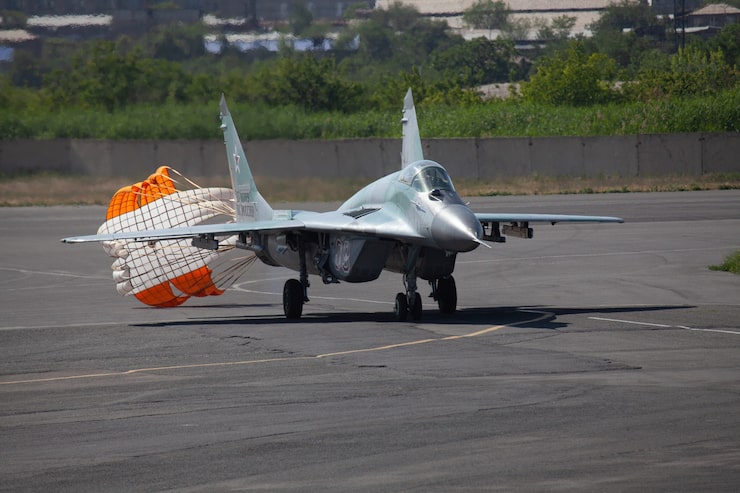
The SEPECAT Jaguar is a British-French aircraft. It’s a versatile, twin-engine aircraft largely intended for ground-attack missions. The airplane was designed in the 1960s and ’70s. It was intended to be a new, inexpensive attack aircraft for the French Air Force and the Royal Air Force (RAF).
Read Also: US Army Drone Pilot: A Complete Guide to the Modern Sky Soldier
The Jaguar was commended for its fighting ability. It juggled nimbleness, speed and payload capacity. The plane could be armed with an array of weapons. This made it suitable for different roles, like close air support and reconnaissance.
The RAF's Sepecat Jaguars saw service in the UK during the 1970s-2007. this plane was a real asset during his years of service. Its retirement ended an era. The Jaguar has since been succeeded by new types such as the Eurofighter Typhoon.
The Rolls-Royce Turbomeca Adour Engine
Motor is the life of an aircraft. The Rolls-Royce Turbomeca Adour engine is the main powerplant for the SEPECAT Jaguar. The Adour is a turbofan engine made by Rolls-Royce, a British company, and Turbomeca, a French aviation firm. It was created in the 1970s for the Jaguar. It aimed to provide high thrust and efficiency.
Design and Development
Rolls-Royce Turbomeca Adour The Rolls-Royce Turbomeca Adour engine is an example of a single-spool, low-bypass turbofan. This is where such an engine has one moving spool, driving both compressor and turbine.
This reduces the weight of the engine, but while retaining enough power. The Adour is quite small in diameter, so ideal for the dimensions of Jaguars.
The Adour engine is a good performer in both subsonic and supersonic regimes. This enables the Jaguar to work across different altitudes and speeds. This makes the motor flexible.
It will be useful for ground strikes, interferences and low level entry missions. That design of the engine incorporates many features that are designed to improve the reliability. It’s been a very strong build and has held up well over the years.
Adour Engine Versions
The Rolls-Royce Turbomeca Adour engine has seen updates over time. These improvements boost performance and extend its lifespan.
The initial adaptation of the motor, Adour Mk 101, was introduced in the first SEPECAT Jaguars. This form was capable of producing around 6,500 pounds of thrust. With time the Adour engine became what was known as the Adour Mk 104.
This enhanced model had improved fuel economy and higher thrust, more reliability. Up to 7,000 pounds of thrust could be produced by the new motor. This gave the Jaguar greater payload-ratio, and made it an effective performer under severe mission conditions.
The engine, which was developed by Rolls-Royce and Turbomeca, has been adapted for other military aircraft as well. This also applies to the 100 trainer planes of the series Sell. This flexibility underscores the engine’s versatility and success in military aviation.
RAF Sepecat Jaguar: Engine Integration and Performance
And The Rolls-Royce Turbomeca Adour power plant was key to the RAF Sepecat Jaguar’s effectiveness. The Jaguar was well known for its speed and agility. Its powerful engines made it capable of many strike missions.
The RAF Sepecat Jaguar’s twin Adour engines had an output of roughly 13,000 lbs or 6,500 lbs each. This power would give the aircraft a speed up to Mach 1.5, which equates over 1,100 mph or 1770 km/h.Fighting capabilities:
The Jaguar has a very strong fighting capability as well. It is also fast in and out of enemy airspace. The plane is capable of carrying an array of weapons, including bombs, rockets and air-to-ground missiles. This upgrade came from the control and reliability of the Adour engines.
Another important factor in the RAF’s operation of the SEPECAT Jaguar was its relatively low maintenance requirements. The Adour engine is user-friendly and easily maintainable. This reduces airplane down time. That made the Jaguar attractive for military customers. It seemed to talk more and hang out less.
Sepecat Jaguar Cockpit of the RAF: A Pilots Eye View
The RAF Sepecat Jaguar cockpit was designed for pilot comfort and mission efficiency. The cockpit was simple compared to today’s fighter jets. Yet, it still had all the key controls for high-performance flying. The cockpit was designed to give good visibility, particularly at very low level which is common for the Jaguar.
You Must Also Like: How AMRAAM Missiles Are Transforming 21st Century Air Combat?
The instrument board was equipped with rudimentary flight controls, radar and focusing equipment. These were all stacked neatly for easy access. The plan then incorporated a heads-up display (HUD). It provides pilots with vital flight information and helps them stay focused on the mission.
Being true to the Jaguar, one of its most noticeable features was its ejection seat which allowed the pilot to bail out in out from a simulated crash up turned attitude. The Jaguar missions often fly low and fast, so the launch framework was crucial for pilot safety.
The cockpit plan was tailored for a hands-on flying experience. The pilot has full control of the airplane during the entire operation. The RAF Sepecat Jaguar cockpit wasn't as advanced as later warrior planes. Yet, it was still good enough for key tasks like ground assault and close air support.
Jaguar’s Legacy and Modern Usage
The SEPECAT Jaguar was the Atlantic the RAF's ( retired 2007). It continues to be used by many air forces around the world. The Jaguars of Indian Air Force (IAF) have also been upgraded.
The aircraft is only flyable with the Rolls-Royce Turbomeca Adour engines installed. It is also retroactively applied to any operational Jaguars. Legacy of the Jaguar means strength and reliability. The RAF has no use for the flying machine at present, but it’s an important part of military flying history. Its engines have proven to last over time.
Conclusion
The success of the SEPECAT Jaguar was due in part to its Rolls-Royce Turbomeca Adour engines. Its impressive performance, sound quality and efficiency enable it to perform particularly well in a variety of missions.
The Jaguar’s engines allowed it to fly high or attack fast. The RAF SEPECAT Jaguar is no longer in service, but its reputation as a versatile and durable aircraft lives on. Other air forces continue to fly the Jaguar.