
I have been following military technology for years. Satellites tracking satellites. Algorithms predicting threats. Systems making decisions in milliseconds. The future of space warfare is here.
But something bigger is happening now. Something called agentic AI. Unlike standard AI that responds to commands, agentic AI operates independently. It interprets complex environments. It generates courses of action. It executes tasks at machine speed.
This is not science fiction. This is happening right now.
What Exactly Is Agentic AI?
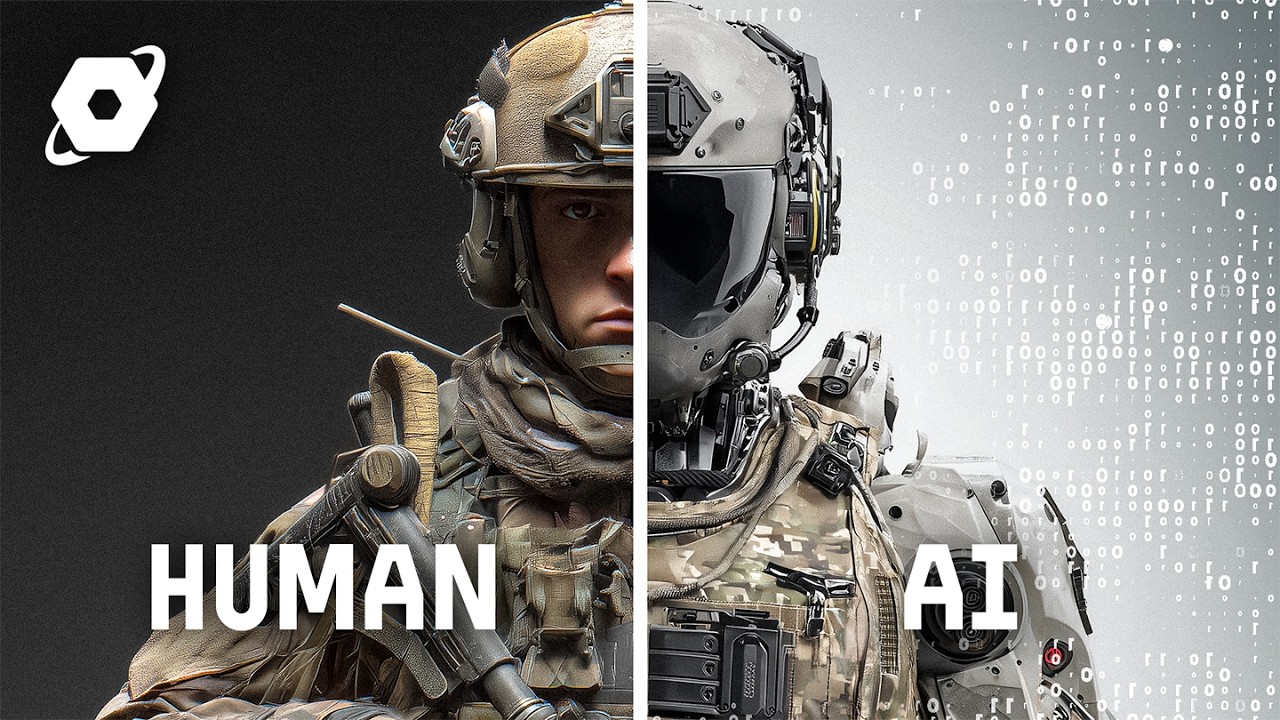
Agentic AI represents a fundamental shift. We are moving from reactive, task-specific systems to autonomous, goal-oriented agents. These agents can reason independently in dynamic environments.
Read Also: Space Force Deepens GEO Footprint: Inside the $90M Operational Heimdall Mission
Think of it like this. A normal AI is a calculator. You input a problem. It gives an answer. Agentic AI is more like a team of analysts. Multiple agents communicate with one another. They collaborate to achieve a certain goal with minimal human interaction.
This capability holds strong potential for militaries. It works especially well at the operational and strategic layer. Everything there is organised into processes. Agentic AI is built to support processes.
How Is Agentic AI Being Used in Space Operations?

TALOS: The AI-Powered Training Agent
The U.S. Space Force is already deploying agentic AI. Slingshot Aerospace recently won a $69.2 million contract. The goal is to advance AI-powered mission readiness for space defense.
At the center of this is TALOS. It is an autonomous AI-powered agent. It imitates realistic satellite actions in training and simulation environments. TALOS evaluates its surroundings. It reasons through potential strategies. It executes objectives within a simulated orbital environment.
TALOS models realistic spacecraft behaviors. This includes space warfare maneuvers and dogfighting strategies. It processes vast amounts of complex data. It supports mission rehearsal across continuously evolving space scenarios.
WINDU: The Digital Guardian
WINDU is another example. It is an AI agent designed to automate space warfare procedures. These tasks are currently performed manually by operators.
Space Domain Awareness tasks are resource-intensive. A Relative Proximity Operation (RPO) analysis between adversarial and friendly satellites demands up to an hour of operator time. WINDU can complete the same analysis in just 60 seconds.
Why Agentic AI Matters for Space Warfare?
The future of space warfare will be determined by the speed of decision. Satellite constellations are proliferating. Adversaries are fielding increasingly sophisticated counterspace capabilities. The ability to sense, analyze and act faster than an opponent will dictate who controls the space domain.
You Must Also Like: SpaceX Transporter-16: Everything You Need to Know About the Historic April Launch
Agentic AI is more than better analytics. It is a new class of AI. It is designed to function as proactive, reasoning collaborators. Imagine an intelligence analyst operating at machine speed. Agentic AI would continuously interpret large data streams. It would detect emerging threats. It would generate operational responses in real time.
One powerful application is the management of proliferated satellite constellations. Future architectures will involve hundreds or thousands of satellites operating simultaneously. The complexity will exceed human operator limits.
The Reality Check
Here is the honest truth. Agentic AI is not ready for everything.
The U.K. Space Agency is taking a measured approach. It is conducting a 12-month activity. The goal is to develop a roadmap of AI's applicability to the space sector.
Persistent difficulties make the technology problematic for critical space applications. Hallucination and lack of explainability remain major concerns. In many cases, sources cited by AI are wrong.
Key Players and Developments
Safran.AI and Technology Innovation Institute announced a strategic alliance. They are developing a next-generation Agentic AI geospatial intelligence platform. The system would transform high-resolution spaceborne imagery into decision-grade intelligence. It would recommend courses of action .
Slingshot Aerospace is the leader in Space Operations Intelligence & Autonomy (SOIA). They deliver AI-powered solutions. These help track, interpret, and act on activity in space .
China's Advances cannot be ignored. Chinese researchers reportedly developed Manus. It is described as the world's first fully autonomous AI agent. Beijing has also launched experiments for its Three-Body Computing Constellation. This processes data directly in orbit using AI.
The Human Element Remains Essential
Human judgment will remain essential. The supervision and ultimate decision authority of humans within the kill chain must be preserved. Effective human-machine teaming is critical. This requires rigorous testing and verification of AI models. It will ensure that agentic systems accelerate decision cycles while maintaining accountability and strategic intent.
Sommer explains it clearly. "When the commander sees a mission, he can decide to prioritise speed, surprise, or logistics sustainment. AI cannot decide on these priorities by itself but humans can".
Similarly, AI can present a range of options based on information. But in the end, it is the commander who assesses the recommendations. The commander makes the final decision. The commander carries the responsibility.
Challenges That Need Solving
Hallucination. AI agents sometimes offer false or misleading conclusions.
Lack of Explainability. It is difficult or impossible to understand how the neural network has arrived at responses.
Data Quality. Credible data is essential. Agentic AI is only as powerful as the data that fuels it.
Security Concerns. Adversarial manipulation of AI is a real threat. Poisoning training data is possible. Finding vulnerabilities in inference models is possible. Manipulating prompts is possible.
Integration Challenges. Connecting agentic AI to legacy military infrastructure is difficult.
What This Means for the Future?
The race to operationalize agentic AI in space is already underway. China is not waiting. Beijing is committing billions in state-directed investment. They are building the data infrastructure. They are developing AI-enabled command networks. They are creating autonomous satellite systems required for machine-speed warfare in space.
The U.S. must move decisively. The Space Force must expand investment in operational data infrastructure. They must accelerate funding for AI-enabled command-and-control architectures.
If you think you can prevail on the future battlefield without AI, you are wrong. You will be overrun every time. The enemy will always be two steps ahead.
Quick Summary
| Aspect | Details |
|---|---|
| What is Agentic AI? | Autonomous, goal-oriented AI that can reason and act independently |
| Current Applications | Training simulations, space domain awareness, satellite management |
| Key Players | Slingshot Aerospace, Safran.AI, TII, U.S. Space Force |
| Main Challenge | Hallucination, lack of explainability, data reliability |
| Human Role | Final decision authority, strategic oversight |
| The Risk | Adversaries like China are advancing rapidly |
Agentic AI in military space operations is not a distant future. It is happening now. The systems exist. The funding is flowing. The race is on.
Human judgment remains central. But technology is transforming how decisions are made in space. Understanding this shift matters. Whether you are in the military, working in defense, or just trying to make sense of the world.
The space domain is contested. Agentic AI will be part of how we defend it.