
The US Army is changing how it fights. Humans will not go first anymore. Machines will. The robotic combat vehicles RCV army program aims to put unmanned ground vehicles on the front lines within two years.
I have tracked this program since 2023. The timelines keep shifting. But one thing is clear. The Army wants these robots badly. Whether they work as promised is a different question.
Let me walk you through what is real, what is broken, and what you should watch for if you follow defense tech.
The 30-Second Summary (Read This First)
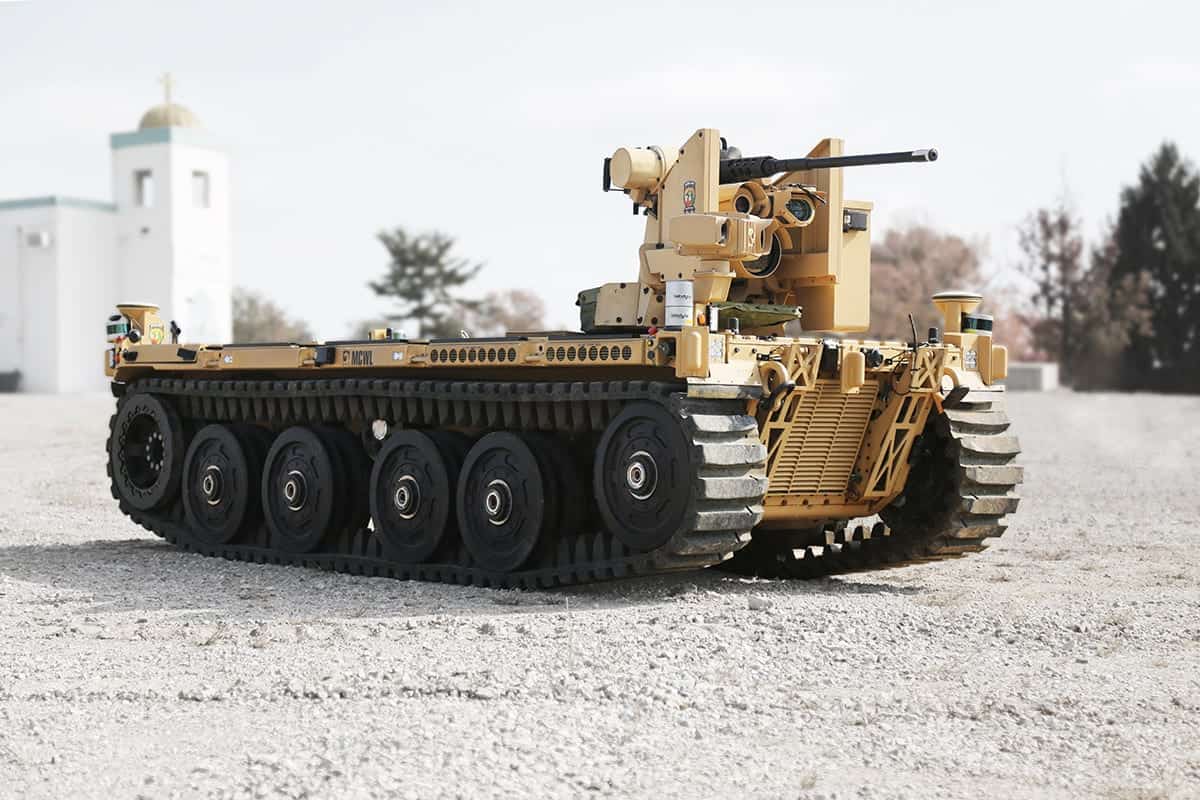
The Army planned to field robotic combat vehicles RCV army units by 2028 . That target is slipping. The service cancelled the main competition in early 2026. But Congress is fighting back.
The Senate Armed Services Committee just added $19 million to buy six RCVs in fiscal year 2026. Yes, the same vehicles the Army tried to kill.
Read Also: US Army Names New Aircraft in Honor of a Historic Kansas Tribe
Confused? You should be. Here is the truth. The technology works in demo settings. Real battlefields are different. Ukraine proved that cheap drones kill expensive robots. The Army knows this. They are rushing anyway.
What Actually Is an RCV? Three Sizes Explained
The Army designed three versions. Each has a different job.
RCV-Light (under 10 tons) – This is the expendable scout. Think of it as a robotic guinea pig. It goes first into danger. If it gets blown up, fine. That is the point. Carries one anti-tank missile and sensors. Armor only protects the "brain" – the computer and radio. The rest is thin metal.
RCV-Medium (10 to 20 tons) – This is the workhorse. Armed with a 30mm cannon and two anti-tank missiles. Has enough armor to survive heavy machine gun fire. Operates alongside manned vehicles. Not expendable but not priceless either.
RCV-Heavy (20 to 30 tons) – The robot tank. Designed to fight beside M1 Abrams. Needs heavy armor and active protection systems. The Army "pumped the brakes" on this variant. Too hard. Too expensive. Too many technical problems.
Here is what matters. The Army prioritized the Light variant first. The thinking is simple. Get cheap, expendable robots into soldiers' hands. Learn fast. Iterate. Do not wait for perfection.
The Messy Timeline: Cancelled, Revived, Confusing
Let me give you the honest timeline. I have watched this program flip-flop more than a politician.
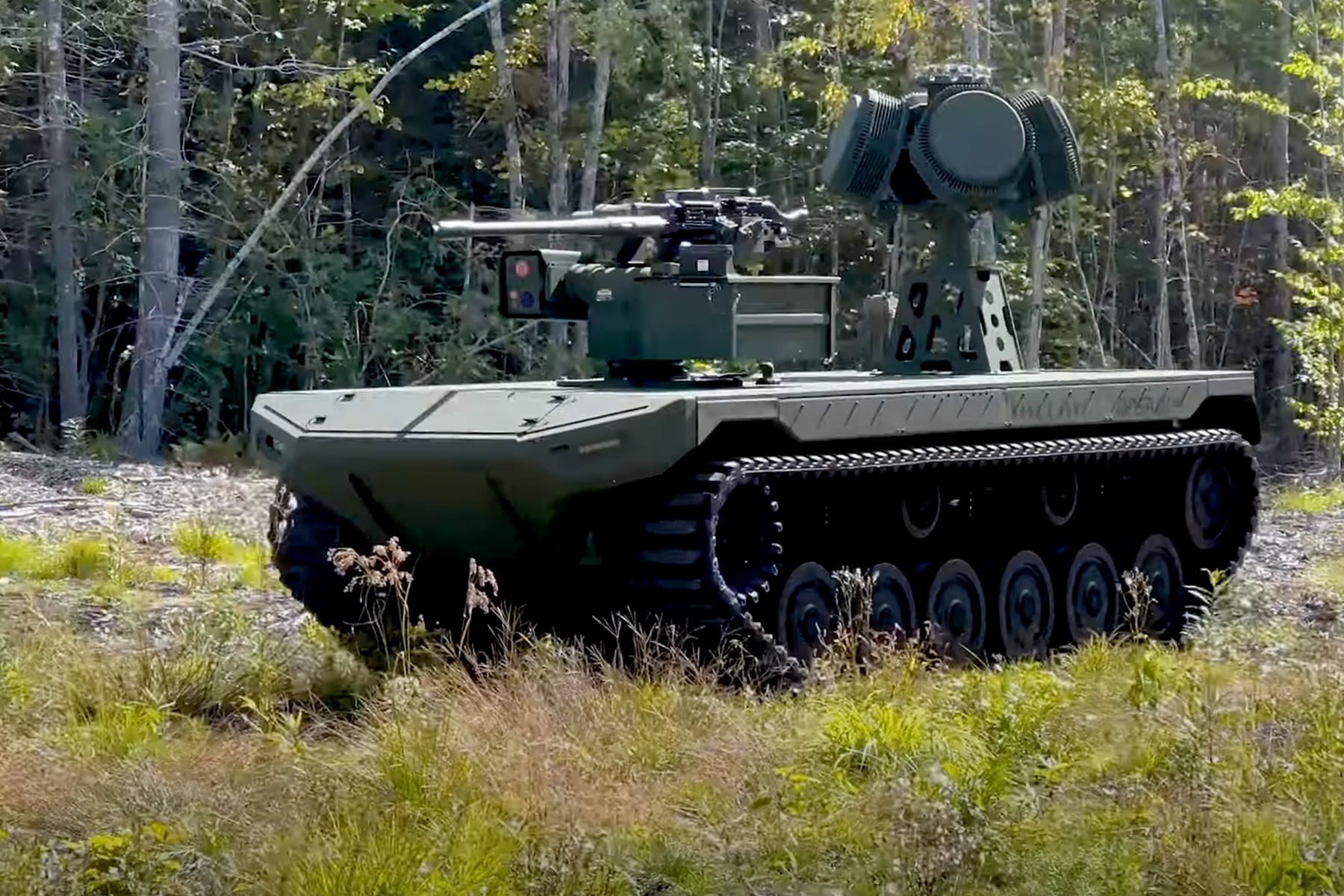
September 2023 – Army selects four companies to build prototypes. McQ, Textron, General Dynamics, and Oshkosh. Each gets roughly $25 million total.
August 2024 – First prototypes delivered to Aberdeen Proving Ground. Testing begins.
Early 2026 – Army cancels the competition. Secretary Daniel Driscoll calls the RCV "incredibly large, incredibly heavy, incredibly expensive" . He admits the requirements were wrong from the start.
May 2026 – Senate Armed Services Committee says no. They add $19 million to force the Army to buy six RCVs anyway .
Where does this leave us? The program is alive but wounded. Congress wants robots. The Army wants to rethink. Nobody agrees on the path forward.
The Ukraine Reality Check (Nobody Wants to Talk About This)
Here is what the Army does not put in press releases. The war in Ukraine changed everything.
Swedish Defence Research Agency released a report in August 2025. The finding is brutal. Unmanned ground vehicles are not reliable enough for large-scale combat.
Ukraine plans to buy 15,000 UGVs in 2025. But actual use remains modest. The reason? They break too often. The software glitches. Communications drop.
You Must Also Like: Celebra Tech Reveals Combat Prototype of Tryzub Laser for Mobile Drone Defense
The bigger problem is drones. Small, cheap FPV drones cost $500. They can kill a $1 million robot. Secretary Driscoll admitted this directly. "Slow, heavy, expensive vehicles have been prime targets for cheap exploding drones" in Ukraine.
This is the core tension. The Army wants robots to replace humans in dangerous jobs. But drones make those jobs dangerous for robots too.
The Software Problem: Army Wants to Build Its Own Brain
Industry is furious about this part.
The Army is developing its own autonomy software. It is called the Robotic Technology Kernel (RTK). The idea is simple. One common brain for all robotic combat vehicles RCV army platforms. Open architecture. No vendor lock-in.
The reality is different. Multiple industry sources told Breaking Defense the RTK has "bugs" and is not mature. In one Saudi test, Army robotic trucks stopped working every time they detected a speed bump or a bridge. The software registered normal road features as obstacles.
One industry source described the acquisition plan as "clunky at best." Another said the Army is trying to "boil the ocean and do it all simultaneously.
The counter-argument comes from Army leaders. It's not going to be perfect," said Brig. Gen. Geoffrey Norman. We just need to get capability out to the field.
That is a risky bet. Field broken robots. Fix them later. Soldiers pay the price if the fix takes too long.
The Alternative Path: Commercial Autonomy
Not everyone is waiting for the Army to figure this out.
DARPA's RACER program proved commercial autonomy works. In October 2025, a Textron Ripsaw M5 equipped with Overland AI software executed a breaching mission. It drove autonomously for 2.5 kilometers. Towed a rocket-propelled mine-clearing line charge. Two soldiers controlled everything from a safe distance.
Major Michael Caddigan called it "by far the most successful and advanced" demonstration of autonomous ground combat capability.
Here is the catch. DARPA built that. Not the Army's program office. The Defense Innovation Unit separately selected Anduril, Overland AI, and Palantir to develop autonomy software for RCV. Multiple teams. Multiple approaches. No single point of failure.
The Army's Chief Technology Officer Alex Miller signaled a shift in December 2025. The service will reevaluate all ground autonomy programs. Cancel anything that "no longer makes sense".
Who Is Building These Robots? The Current Players
As of mid-2026, these are the main contractors:
Textron – Built the RIPSAW M3 prototype. Tracked vehicle. Delivered October 2024. Also working with DARPA on autonomy.
General Dynamics Land Systems – Delivered the Tracked Robot 10-tonne (TRK) RCV. Also tracked. Delivered October 2024.
Oshkosh Defense – First to deliver a prototype in August 2024. Tracked design.
McQ Inc. – Working with BAE Systems and HDT Global. No public delivery details as of late 2024.
BAE Systems Australia – Built ATLAS CCV, an 8x8 wheeled RCV. Completed autonomy trials in February 2026. Covers everything from teleoperation to full sense-and-avoid.
The Australian ATLAS is interesting. It progressed from concept to functional prototype in sixteen months. That is fast for defense. BAE is now marketing it internationally.
What Works Today vs. What Is Broken?
Let me separate demo success from battlefield reality.
Works in testing:
-
Waypoint navigation on clear terrain
-
Remote teleoperation (human drives via radio)
-
Basic obstacle detection (sometimes)
-
Minefield breaching with human supervision
Still broken:
-
Reliable off-road autonomy at speed
-
Operating through GPS jamming or electronic warfare
-
Distinguishing threats from civilians
-
Maintaining control links beyond a few kilometers
-
Anything involving complex urban environments
The FOI report from Sweden is blunt. The "transparent battlefield" where drones see everything means any vehicle without active protection is a target. Electronic warfare can blind your control link. Then your expensive robot is just a paperweight.
The Cost Reality: Not as Cheap as Promised
Remember the "expendable" promise? RCV-Light was supposed to be cheap. Disposable. Like a bullet you fire and forget.
That is not what happened.
Secretary Driscoll admitted the RCV became "an incredibly expensive, relatively exquisite tool". The requirements creep killed the affordability goal.
For context, the global robotic UGV market in North America is expected to reach $188 million in 2026. That is not nothing. But compared to the Army's overall budget? Small potatoes.
The real cost question is operational. How many spare parts do you need? How many technicians per robot? How many hours of maintenance for each hour of operation? The Army has not answered these questions publicly.
When Will Soldiers Actually Use RCVs?
The official answer is FY2028 for first unit fielding. That assumes a production decision in FY2027.
The real answer is messier.
Stuart Young, outgoing RACER program manager at DARPA, told National Defense that large-scale autonomous ground operations are "at least a decade away" . He points to a fundamental mismatch. The Army wants autonomy cheap. But they cannot define what they want industry to build.
Patrick Acox from Forterra is more optimistic. He sees selected missions – resupply, breaching, protective fires – fielded within five years. Full autonomous formations? Ten years.
My take after watching this program? The first RCVs will reach units by 2028. They will be used in very limited ways. Mostly reconnaissance and obstacle clearance. They will require constant human supervision. And they will break more often than advertised.
What to Watch for in 2026 and 2027?
If you follow defense tech, here are your milestones.
Summer 2026 – The Army's MARS program exercise at Fort Irwin. Four Textron M5s from DARPA will be tested further. Engineers want a mesh network allowing one soldier to control multiple breaching vehicles from 20 kilometers away.
Early 2027 – Production decision for RCV-Light. Assuming Congress gets its way with the $19 million appropriation. If the Army resists, watch for more legislative fights.
Late 2027 – Prototype deliveries for Phase II. Down-selected contractors will deliver nine RCV Production Representative Prototypes.
2028 – First unit fielding. Mark your calendar. Check back to see if the Army actually hits this date.
The Final Thoughts
The robotic combat vehicles RCV army program is not dead. But it is not healthy either. Congress is forcing the pace. The Army wants to slow down and rethink. Industry is frustrated with the software approach.
The technology exists. DARPA proved that. But taking lab success to muddy battlefields with electronic warfare and cheap drones is a different problem. Ukraine showed us the gap between "works in testing" and "works in combat."
If you are a defense contractor, focus on autonomy software. That is the bottleneck. The hardware is the easy part.
If you are a soldier or veteran watching this program, temper your expectations. These robots will arrive later than promised. They will do less than advertised. But they will eventually save lives by taking the first hit.
That alone makes the effort worth watching.