
The drone threat has changed everything for mechanized infantry. A small quadcopter can spot your position and call in artillery fire. An FPV drone loaded with explosives can track your vehicle and hit its weakest point.
The war in Ukraine has shown this over and over. Armored vehicles worth millions are being destroyed by drones costing a few hundred dollars. The old ways of fighting no longer work.
Armies around the world are scrambling to integrate counter-UAS systems into their mechanized infantry units. This is not some future technology. It is happening right now on NATO's eastern flank.
How Counter-UAS Systems Fit Into Mechanized Units?
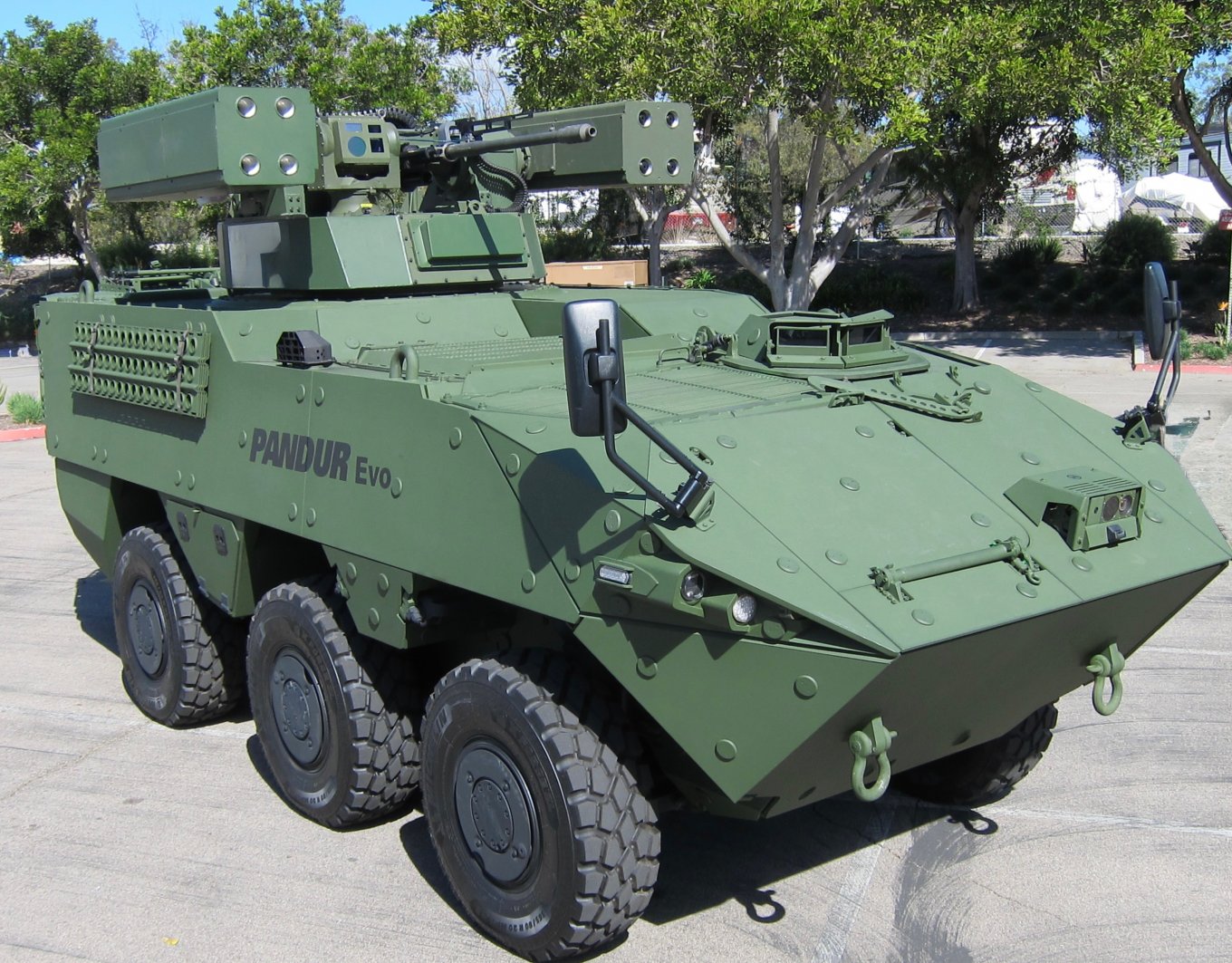
The Infantry's New Reality: Fighting in Three Dimensions
For decades, infantry fought on a two-dimensional battlefield. You worried about threats in front of you, on your flanks, and perhaps from above in the form of aircraft or artillery. Drones have added a new, persistent, and cheap dimension to the fight.
Read Also: Wheeled vs Tracked Infantry Fighting Vehicle Mobility Guide
A drone can hover silently at 400 feet, watching your every move, invisible to the naked eye. This has a profound effect on how infantry operates.
In the British Army, paratroopers are learning to fight in this new environment. Major John Bryning, who commands a company of paratroopers, puts it bluntly: "Drones present two threats on the battlefield it is a lot harder to remain undetected and, once you’ve been found, you can expect to be targeted very quickly and precisely" .
This means basic infantry skills like camouflage and concealment must be reapplied with a new intensity. It also means you need a way to fight back against the eyes in the sky, and you need it integrated into your vehicle, into your squad, and into your battle rhythm.
The U.S. Marine Corps has recognized this in its new "Ground Combat Element 2040" blueprint. The Corps is pushing air defenses down to the squad level because small drones are now the most significant risk to ground maneuver . They believe you need layered defenses, both active and passive, to keep the initiative in a drone-covered world.
Layered Defense: The Core of the Solution
No single piece of gear will defeat the drone threat. You need a "layered" defense. Think of it as an onion. The outer layers are about detection and early warning. The inner layers are about disruption and destruction.
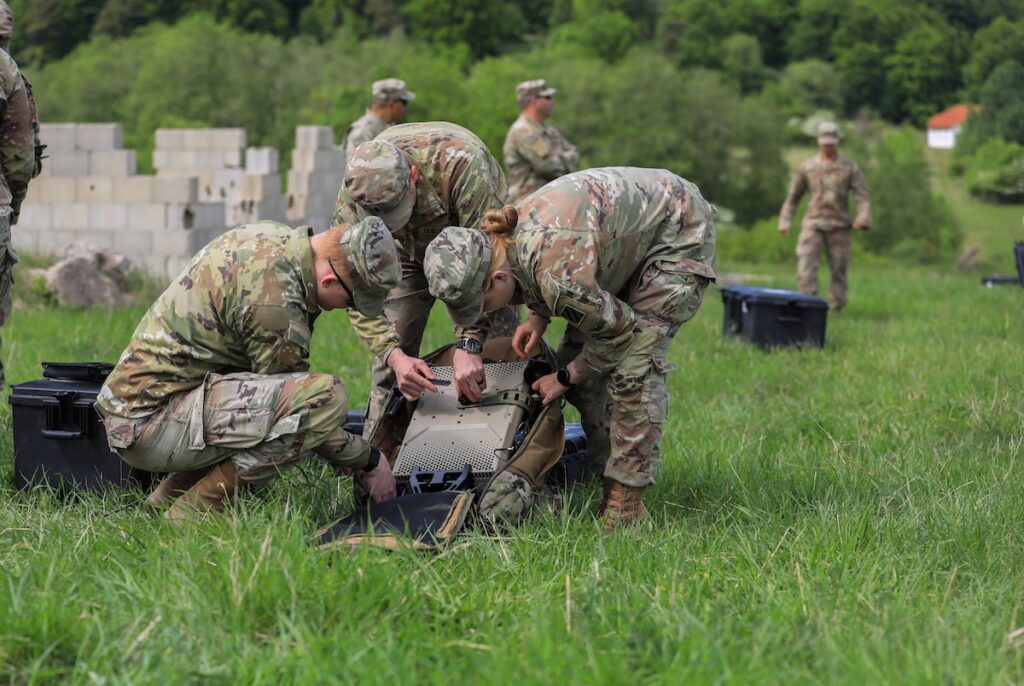
The key is to integrate these layers into the vehicle itself, so the crew doesn't have to juggle a dozen separate, unconnected systems while under fire.
You Must Also Like: US Army Names New Aircraft in Honor of a Historic Kansas Tribe
Project Flytrap, a U.S. Army V Corps initiative, is the best example of this approach in action. It’s a series of exercises where soldiers from the U.S., U.K., and other NATO nations test and refine counter-drone tactics and tech in real field conditions .
The first layer is Detection. You can't shoot what you can't see. This involves a mix of sensors:
-
Radar: Systems like the EchoShield radar, mounted on Stryker vehicles, are designed to pick up the small radar cross-section of consumer and military drones. They can track a drone's position and movement to cue other systems.
-
Radio Frequency (RF) Detectors: These passive systems sniff out the control signals used to pilot a drone. They don't emit any energy of their own, making them hard for the enemy to detect. This can give soldiers a warning that a drone is nearby. Body-worn versions are also being tested.
-
Passive Listening: Some devices "hear" the sound of a drone's rotors from over 500 meters away and can alert troops, much like the early warning networks used in Ukraine.
Once a drone is detected, the next layer is Disruption:
-
Electronic Jammers: The British Army, for instance, has been using "drone guns" that block the control signals between the drone and its pilot . This can cause the drone to crash or, depending on its programming, fly back to its operator.
-
Wearable Jammers: Systems like the Pitbull are small, radio-sized devices that can be worn by a soldier. It can be activated to create a localized jamming bubble to protect a small patrol or position.
If jamming doesn't work, or if a drone is autonomous and doesn't rely on a control link, you need a Kinetic Kill option:
-
Smart Sights: The SMASH sight mounts on a standard rifle. It uses AI to track a drone's movement and will only let the soldier fire when it has a clear, high-probability shot. This turns a regular soldier into a potent anti-drone asset.
-
Shotguns: For close-in threats, like a drone about to drop a grenade, shotguns are highly effective. The British Army is training soldiers to engage FPV drones at close range with shotguns.
-
Specialized Ammunition: The U.S. Marine Corps has purchased 400,000 rounds of special anti-drone ammunition for its standard M4 carbines and M27 rifles. The round separates into five distinct projectiles after firing, massively increasing the chance of hitting a small, fast-moving target.
The Vehicle as a Hub: The Armored Fighting Vehicle Reborn
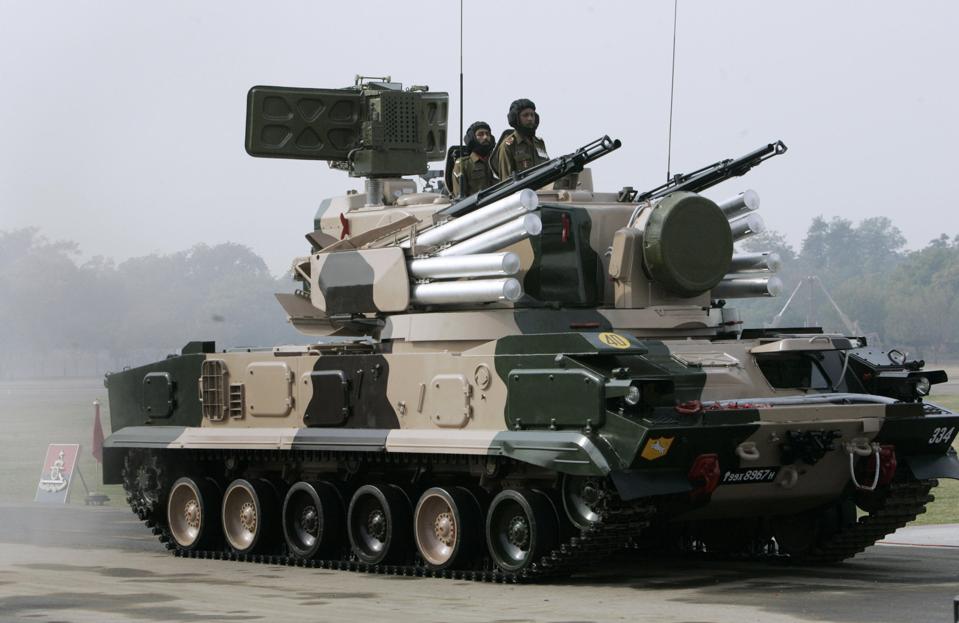
In a mechanized infantry unit, the armored fighting vehicle is the center of gravity. A Stryker, Bradley, or the new Hunter IFV is not just a taxi; it is a mobile fortress, a sensor platform, and a command post. For counter-UAS to work, it must be integrated into this vehicle.
Latvia is a perfect case study. They have ordered 84 new Hunter infantry fighting vehicles, built on the ASCOD platform. Before the first vehicles are even delivered in October 2026, they are testing how to integrate counter-UAS systems onto them .
The tests at the Ādaži training base were a "live look" at how you make a vehicle drone-proof. They took a Hunter vehicle and bolted on a mix of sensors, electronic jammers, and kinetic options.
They put the vehicle through static and moving scenarios while multiple drones swarmed around it. The goal was to see how well these systems could communicate and work together through the Hunter's electronic architecture .
This is a huge challenge. You can't just strap on a radar, a jammer, and a gun and call it a day. The vehicle's power, cooling, and data networks must handle all this new equipment. The crew needs a single, unified display that shows them the drone picture, not a patchwork of separate screens.
The integration work happening in Latvia shows that adding drone defense is as much about software and network integration as it is about hardware . They are also testing the use of unmanned ground vehicles that can push sensors forward, acting as remote ears and eyes for the main vehicle, reducing its own signature and risk .
Operational Integration: Lessons from the Field
Integrating this gear is only half the battle. The other half is learning how to use it in a fight. This is where Project Flytrap is producing its most valuable lessons.
Project Flytrap's goal is to get technology into soldiers' hands in the field and figure out what works and what doesn't . It's a "soldier-driven innovation effort" . They aren't just testing gear; they are testing tactics.
A key observation from the Flytrap exercises is the shift in responsibility. A U.S. Army infantryman, Staff Sgt. Mateus Nunes, noted that they are implementing these systems at the troop, company, and squadron levels . The fight against drones is no longer just a problem for the air defense artillery. It is an infantry fight.
As Capt. Brendan Printup, commander of a U.S. Stryker troop, put it: "This is the first time at the troop level that we are going to be testing a mounted Stryker platform fighting the counter-UAS fight.
These Eagle Troop Soldiers I’m talking about the E-5 sergeants and below this is their fight". The sergeants and corporals in the turrets and the driver's holes are now the front line of air defense. They are the ones learning how to move, fight, and survive while constantly looking over their shoulders at the sky.
The British Army is taking a similar approach. A battalion of The Rifles recently completed a combat marksmanship exercise designed specifically to integrate counter-drone tactics into their training .
They practiced identifying, tracking, and jamming drones before engaging them with precision rifle fire and shotguns at close range. The exercise combined electronic warfare with live-fire engagements, creating a holistic approach to the threat.
They are building a new annual marksmanship test specifically focused on defeating drones, proving that counter-UAS is becoming a core infantry skill, not a niche specialty .
The Cost Equation and the Future of Integration
One of the biggest drivers of this integration is cost. Firing a multi-million dollar missile to shoot down a $500 drone is a losing proposition. Project Flytrap and other initiatives are focused on finding cheap, effective solutions.
The focus is on "reducing the cost curve in defeating drones and incorporating cheaper attritable systems" . The live-fire demonstration in Poland, where a truck-mounted launcher fired an expendable interceptor drone, was highlighted for its cost-effectiveness.
The same type of interceptor has already been used in combat in Ukraine . This is the future of counter-UAS for mechanized infantry: an integrated, layered system of cheap sensors, jammers, and bullets, all managed from the commander's seat of an armored vehicle. It's about turning every infantry vehicle into a mini-air-defense platform.