
LEO satellite congestion solutions are shifting from reactive to proactive. The old approach wait for a near-miss warning, then maneuver—doesn't scale.
With over 18,000 active satellites in low Earth orbit, and SpaceX alone conducting 144,404 collision avoidance maneuvers in just six months, the system is straining.
I've followed this problem for years. The solutions fall into three buckets: move satellites lower, route traffic smarter, and coordinate better. None is perfect. Together, they buy time.
Lower Altitudes: SpaceX's Big Bet
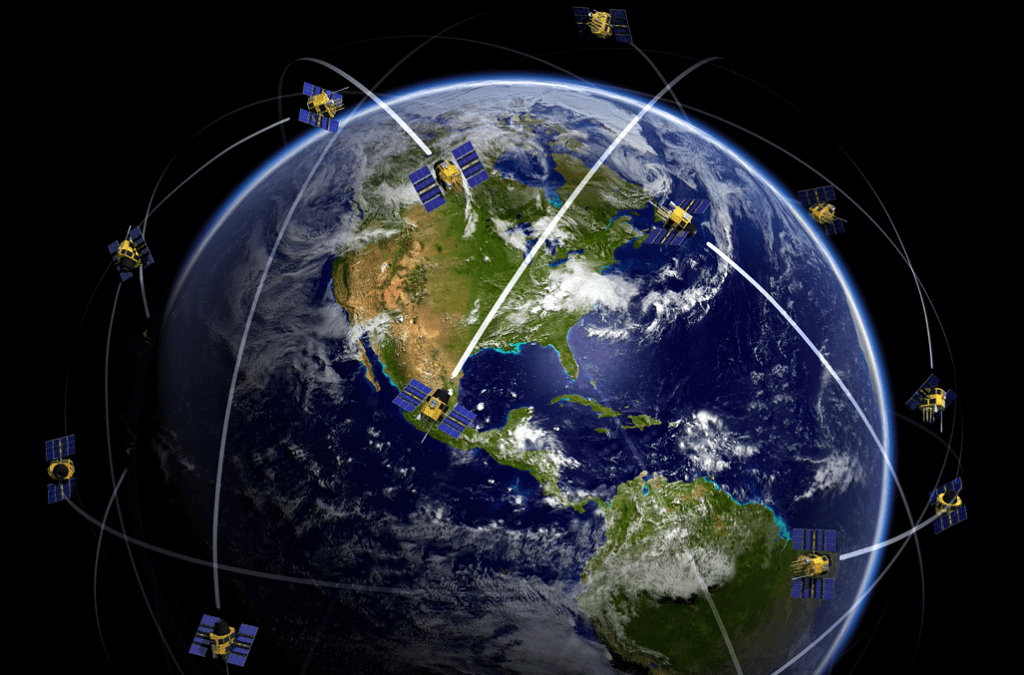
SpaceX is moving 4,400 Starlink satellites from 550 km to 480 km throughout 2026. The logic is straightforward. Lower altitude means more atmospheric drag.
Defunct satellites decay faster. At 550 km, a dead satellite might linger for four years. At 480 km, that drops to a few months—an 80% reduction.
Read Also: Agentic AI In Military Space Operations: What You Need to Know?
This matters because of the Kessler Syndrome risk. If satellites collide and create debris, that debris creates more collisions. A cascade could render LEO unusable.
Lower orbits also reduce collision probability for a simpler reason: less traffic. Fewer satellites operate below 500 km. Moving there mechanically reduces close approaches.
The trade-off: Lower orbits mean more atmospheric drag during normal operations. Satellites must burn fuel more often to maintain altitude. This shortens operational lifespan. SpaceX accepts that trade for safety.
Smarter Routing: AI Takes Over Traffic Management
Traditional routing algorithms react to current conditions. They see a congested link, then reroute. By then, the congestion has already happened.
New research uses machine learning to predict congestion before it occurs. A 2026 paper introduced Dynamic Predictive Routing (DPR), which uses graph neural networks to anticipate short-term network evolution. Simulations showed up to 9% congestion reduction in heavily loaded networks.
Another approach, ATLAS (Adaptive Twin-mode Load-balanced Orbital routing), distributes traffic across the constellation rather than concentrating it on shortest paths.
It switches between centralized and distributed algorithms depending on link failures. The result: better throughput, better load balancing, and robustness against failures.
For users, this means fewer dropped connections. For operators, it means squeezing more capacity from existing hardware.
Better Coordination: The Missing Piece
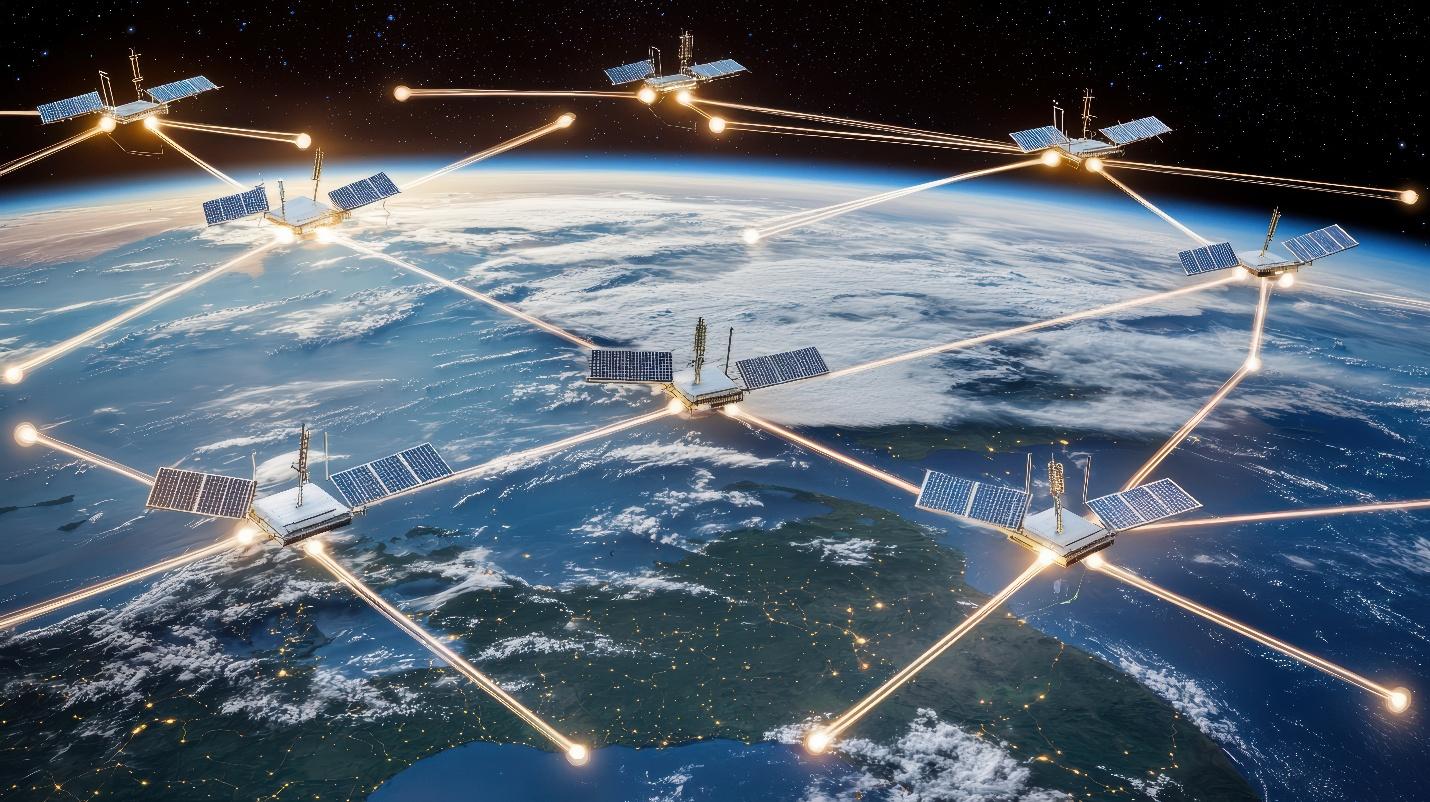
Here's the uncomfortable truth. Collision avoidance requires cooperation. But operators don't always cooperate.
You Must Also Like: SpaceX Transporter-16: Everything You Need to Know About the Historic April Launch
A 2025 incident proved this. A Chinese satellite launched from a Kinetica-1 rocket came within 200 meters of a Starlink satellite. No prior coordination. No warning.
The regulatory framework remains fragmented. The European Parliament's 2026 briefing noted that orbital congestion rules are inconsistent across jurisdictions. Without common standards, operators have little incentive to share trajectory data or coordinate maneuvers.
Stargaze: SpaceX's Attempt
SpaceX launched Stargaze, a space situational awareness system using cameras already mounted on Starlink satellites. These cameras normally track stars for navigation. Now they also track other objects.
Stargaze generates up to 30 million observations daily. It can detect maneuvers within hours and issue close-approach warnings.
In a December 2025 test, Stargaze detected another satellite changing trajectory just five hours before a pass. It updated the collision prediction and Starlink maneuvered in time.
SpaceX plans to offer Stargaze to other operators for free by spring 2026. More data means better predictions. But it also creates a new problem: multiple SSA providers could generate conflicting predictions if standards aren't harmonized.
In-Orbit Sensors: Watching from Above
Ground-based radar has limits. It can't track tiny debris. It struggles with objects in certain orbits. A 2026 IEEE paper proposed using LEO satellites themselves as optical sensors for space traffic monitoring.
The concept: equip satellites with wide-field cameras. They watch for debris and other satellites. This provides coverage where ground radar can't reach. Simulations showed revisit periods of 0.4 to 5.7 days for targets at 552-650 km altitude.
This doesn't solve collisions today. But it improves tracking, which improves predictions, which reduces false alarms and missed threats.
The Economic Problem Nobody Wants to Discuss
A 2025 paper in the Journal of the Association of Environmental and Resource Economists explained why Kessler Syndrome is an economic problem, not just a physics problem.
Orbital slots aren't property. No one owns them. Operators own satellites, but not the space they occupy. This creates a classic "tragedy of the commons." Every operator benefits from launching satellites. Every operator bears only a fraction of the collision risk their satellites create. The result: over-launching.
The paper showed that under open-access conditions, Kessler Syndrome can occur even when it's economically irrational for society as a whole.
The solution? Either assign property rights, impose launch taxes, or regulate constellation sizes. None of these is politically easy.
What Actually Works?
Based on the research and real-world data, these approaches deliver results:
1. Lower altitudes for new constellations. The physics is undeniable. Faster decay reduces long-term risk. SpaceX's 480 km move is a model others should follow.
2. Predictive routing. AI-based load balancing squeezes more capacity from existing infrastructure. It doesn't solve collisions directly, but it reduces the traffic pressure that causes them.
3. Mandatory data sharing. Coordination only works if operators share trajectory data. Voluntary systems like Stargaze help, but regulation would help more.
4. Constellation size limits. This is the elephant in the room. SpaceX plans 34,400 satellites. China is building its own megaconstellation. Without limits, congestion worsens regardless of technical fixes.
The Final Thoughts
No single solution fixes LEO congestion. Lower altitudes help. Better routing helps. Improved tracking helps. But the fundamental problem remains: too many satellites, too little coordination, no enforceable rules.
The Kessler Syndrome threshold is real. The economics encourage over-launching. The regulatory framework is fragmented. Technical fixes buy time, but they don't change incentives.
For satellite operators, the practical takeaway is this: invest in predictive routing and lower-altitude designs. For policymakers, the takeaway is harder: voluntary coordination isn't enough. Rules matter. Enforcement matters. And time is running short.